
Voters approve increase in ambulance tax levy
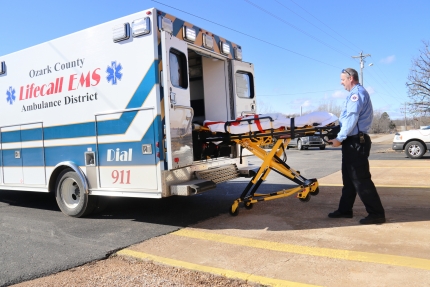
Ozark County Ambulance emergency medical technician Ed Doiron stows a patient-transport gurney inside the ambulance to prepare for the next emergency call. Times photo/Jessi Dreckman.
Ozark County voters on Tuesday, April 3 approved a proposal by the Ozark County Ambulance District to reset the district's current levy rate of .1242 cents per $100 of assessed valuation up to a maximum of 28 cents per $100 assessed valuation starting in the current tax year.
According to unofficial results, 547 voted for the proposed increase and 480 voted against it. A simple majority was required.
Ambulance district administrator Eddie Delp said Tuesday night, “On behalf of the board of directors of the Ozark County Ambulance District, I would like to thank the citizens of Ozark Country who supported us. Thanks to you, we will be able to continue to provide the best possible emergency medical service system.”
This is the second time in a year that a proposed increase in the tax supporting the ambulance district was put before the voters.
In April 2017 another proposed increase in the ambulance tax levy was turned down by fewer than 100 votes: 530 against and 432 in favor. That request asked voters to authorize resetting the then-current maximum levy of .123 cents per $100 of assessed valuation to a maximum of 30 cents per $100, with the rate increase being subject to a corresponding rollback in the current half-cent sales tax that supports the district, as required by law.
In an interview with the Times in February, ambulance district administrator Eddie Delp reminded voters again that, if the levy reset was approved, the actual property tax collected would be reduced proportionately depending on the amount of sales tax collected. An existing half-cent sales tax helps fund the ambulance district, and the county "takes the total dollars of sales tax collected and deducts that amount from the property tax to be collected," Delp said.
He has said that the complicated funding system, which includes the "sales-tax rollback," makes it hard to get a levy increase passed because the required language makes it seem like the total levy is more than doubling, when in fact it's not.
The district’s board of directors set each year’s actual levy during their August meeting based on the upcoming year’s budget, which is based on the district’s anticipated needs, he said. For example, Delp said, although the 2017 ballot request had asked for a maximum levy of 30 cents, that maximum would probably be unnecessary most years. Instead, he said, the net increase of the tax would be only 16 or 17 cents per $100 valuation.
We’ll have precinct-by-precinct vote totals in next week’s Times.